
Children with language processing problems and weak working memory skills typically need this kind of explicit and logical explanation in order gain upper level literacy skills. A structured language approach to spelling reduces the burden on working memory and allows the child to use their stronger reasoning skills.
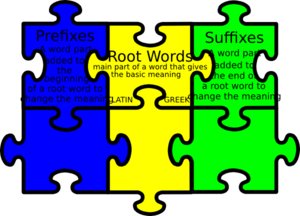
The English spelling system is described as "morphophonetic". That is, word structure is based on both morphology and phonetics. Although we often start teaching word reading and spelling by introducing speech sounds and letter symbols (i.e., phonics), there is a strong argument for teaching meaningful word parts (i.e., morphology) from the very beginning, as well. This approach differs from conventional approaches to spelling used in most schools in that it:
- addresses spelling and word reading at both phonological and morphological levels, using an inquiry approach that is based on reason and logic as opposed to rote memory;
- supports phonics instruction from the earliest period, with explicit detail about spelling conventions that are commonly omitted or misrepresented as "irregular"
An intervention approach that includes in every session systematic, explicit instruction across all the domains of the language system is called a multi-linguistic factors approach. Research supports the superiority of this type of approach over approaches that focus on one or domains (e.g., a phonics approach only).
RESOURCES:
1. For an overview of morphology terms and definitions see the PowerPoint (from the University of Delhi) attached below.
2. Real Spelling is a comprehensive resource for educators who want to understand English spelling. Its is taught through the WordWorks Literacy Centre. It is a structured language approach for educators who want to learn how to use the method of Socratic inquiry in teaching English spelling, and it harmonizes perfectly with an Orton-Gillingham /structured language approach like Lexercise. For a discussion of the use of Real Spelling with dyslexic students see "Working with Struggling Readers" on the WordWorks site.
3. These videos from Lexercise Live Broadcasts introduce this approach:
- Rough-ing It With Real Spelling
- English Morphology: What is it and how it can help struggling readers and writers
- Beginning with word sums and the use of a matrix
- Investigating graphemes in grade 1
- Does the word 'does' make sense?
- Highlighting letter teams (digraphs & trigraphs)
- Building word KNOWLEDGE from the word KNOW
- A scientific inquiry of spelling structure and meaning in the word "refugee"
- Free and bound bases
- Morphological Jeopardy
- Structured spelling with a matrix
Morphology - by http-::people.du.ac.in:~pkdas:inter:morph.pdf